Best Order Management Software for Ecommerce in 2026: The Complete Buyer's Guide

Table of Contents

Share On


Best Order Management Software for Ecommerce in 2026: The Complete Buyer's Guide
Most ecommerce operators don't realize they have an order management problem until peak season hits. Orders pile up across Shopify, Amazon, and wholesale channels simultaneously. Inventory promises made at checkout don't match what's actually pickable in the warehouse. Carrier selection happens manually or by default. Returns trigger reconciliation chaos that takes days to untangle.
The fix isn't faster picking or more shipping labels. It's a purpose-built order management system (OMS) that can coordinate demand across every channel, route orders intelligently to the right fulfillment node, and connect with your warehouse and delivery operations in real time.
This guide covers what the best order management software for ecommerce must do in 2026—not just the feature checklist, but the operational logic that separates tools that scale from tools that stall. Whether you're managing 500 orders a day or 50,000, here's how to evaluate, compare, and choose the right OMS for your operation.
What Is an Order Management System (and Why the Old Definition Falls Short)
The traditional definition of an OMS is a system that captures orders from multiple channels and routes them to the right fulfillment location. That definition was adequate in 2018.
In 2026, it doesn't cut it.
Today's ecommerce operation spans multiple sales channels—owned store, Amazon, TikTok Shop, wholesale portals, B2B—multiple fulfillment nodes including owned warehouses, 3PL partners, dark stores, and retail backrooms, and multiple carrier relationships. Orders need to be routed not just to a location but to the right location based on real-time inventory, shipping cost, delivery SLA, and carrier performance.
A modern OMS is less a router and more an orchestration engine. It needs to receive and normalize orders from any channel, check real-time inventory across all nodes, apply configurable business rules to select the best fulfillment path, communicate with warehouse execution systems to trigger pick-pack-ship, select carriers and generate shipping labels, manage exceptions and partial fulfillments, handle returns and reconcile inventory, and provide end-to-end order visibility for both customers and operations teams.
That's a meaningfully different scope from "receives orders and routes them." The best order management software for ecommerce in 2026 handles all of this—and does it in a way that doesn't require a team of engineers to maintain.
The 6 Capabilities That Separate Strong OMS Platforms from Weak Ones
Before comparing specific platforms, it's worth anchoring on the capabilities that actually drive ecommerce performance. Most comparison sites list features. This section explains what those features need to do operationally.
1. Real-Time Inventory Visibility Across All Nodes
An OMS that can't see accurate, real-time inventory is operationally dangerous. If your system shows 50 units available when only 30 are actually pickable, you will over-promise and under-deliver. Real inventory visibility means the OMS is reading live data from your WMS or fulfillment partner—not syncing on a scheduled delay. For multi-node operations, this requires a unified data layer that aggregates inventory across warehouses, 3PLs, and retail locations into a single available-to-promise (ATP) view.
Weak OMS platforms batch-sync inventory, creating lag-induced overselling, or force manual reconciliation across locations. Strong platforms maintain a live ATP engine that prevents stockout promises before they happen.
2. Intelligent Order Routing
Routing rules in most platforms are simpler than the problem requires. "Ship from the nearest warehouse" fails to account for carrier cutoff times by location, SKU-level inventory imbalances, fulfillment cost differentials by node, hazmat or dimensional weight restrictions, peak capacity at specific facilities, and SLA requirements that vary by channel. Amazon Prime has materially different delivery expectations than your DTC store.
The best OMS platforms let you configure multi-variable routing logic—prioritizing speed, cost, inventory balance, or carrier availability—and apply different rules per channel or order type. Static, single-variable routing is a liability at scale.
3. WMS Integration Depth
An OMS that can route orders but can't communicate cleanly with a WMS creates a dangerous operational gap. When the OMS sends a fulfillment instruction, the WMS needs to acknowledge it, confirm inventory availability, create a pick task, and send back a status update in real time.
Weak integration typically means: OMS sends an order file, WMS processes it in batch, OMS polls for status updates every 15 minutes. In high-volume operations, that lag creates fulfillment errors, incorrect promised delivery dates, and unnecessary customer service escalations. Strong integration means synchronous or near-real-time communication between order routing and warehouse execution. The best platforms run both from a shared data model—eliminating the integration problem entirely.
4. Multi-Channel Normalization
Every channel sends orders differently. Shopify has one data model, Amazon has another, EDI-based wholesale orders have dozens of format variants, and B2B portals often export CSVs. An OMS must normalize all of these into a unified order object before it can route or fulfill. Normalization matters because downstream systems—WMS, carrier, ERP—need consistent, predictable data. A poorly normalized order creates errors at every step downstream.
Look for platforms that handle channel normalization natively, not through middleware add-ons that add latency and introduce additional failure points.
5. Returns and Reverse Logistics Management
Returns are not an afterthought. For most ecommerce categories, return rates run 15–30%. An OMS that doesn't handle returns well forces operations teams into manual reconciliation cycles that damage inventory accuracy and slow restocking velocity.
Good returns management in an OMS includes return authorization (RMA) generation, routing the return to the right processing node, inspecting and grading returned inventory, restocking or disposing of returned items, and triggering refunds or exchanges back to the customer. Weak platforms handle returns as a separate workflow, creating data silos that corrupt inventory counts over time.
6. Order Visibility and Proactive Exception Management
Customers in 2026 expect real-time tracking, not "your order is being processed." A modern OMS should expose order status events that power branded tracking pages, proactive delivery notifications, and customer service portals.
From an operations standpoint, order visibility gives your team the ability to intervene before a problem becomes a complaint—catching stuck orders, missed handoffs, or carrier exceptions before the customer calls in. Reactive exception management is expensive. Proactive exception management is a margin advantage.
How to Evaluate OMS Platforms: A Buyer's Framework
Rather than ranking platforms by features, here's a more useful buyer's framework based on operational fit.
Match the OMS to your fulfillment model, not your channel count.
| Fulfillment Model | What Your OMS Must Do Well | ||| | Single warehouse, multi-channel | Channel normalization, basic routing, WMS integration | | Multi-warehouse, owned | Distributed inventory management, node-level routing rules, live ATP | | 3PL-reliant | 3PL portal integration, EDI support, status visibility from partner nodes | | Hybrid (own + 3PL + dark store) | Real-time ATP across all nodes, routing by node type, cost-based logic | | Omnichannel (retail + ecom) | Ship-from-store, BOPIS, unified inventory across retail and DTC |
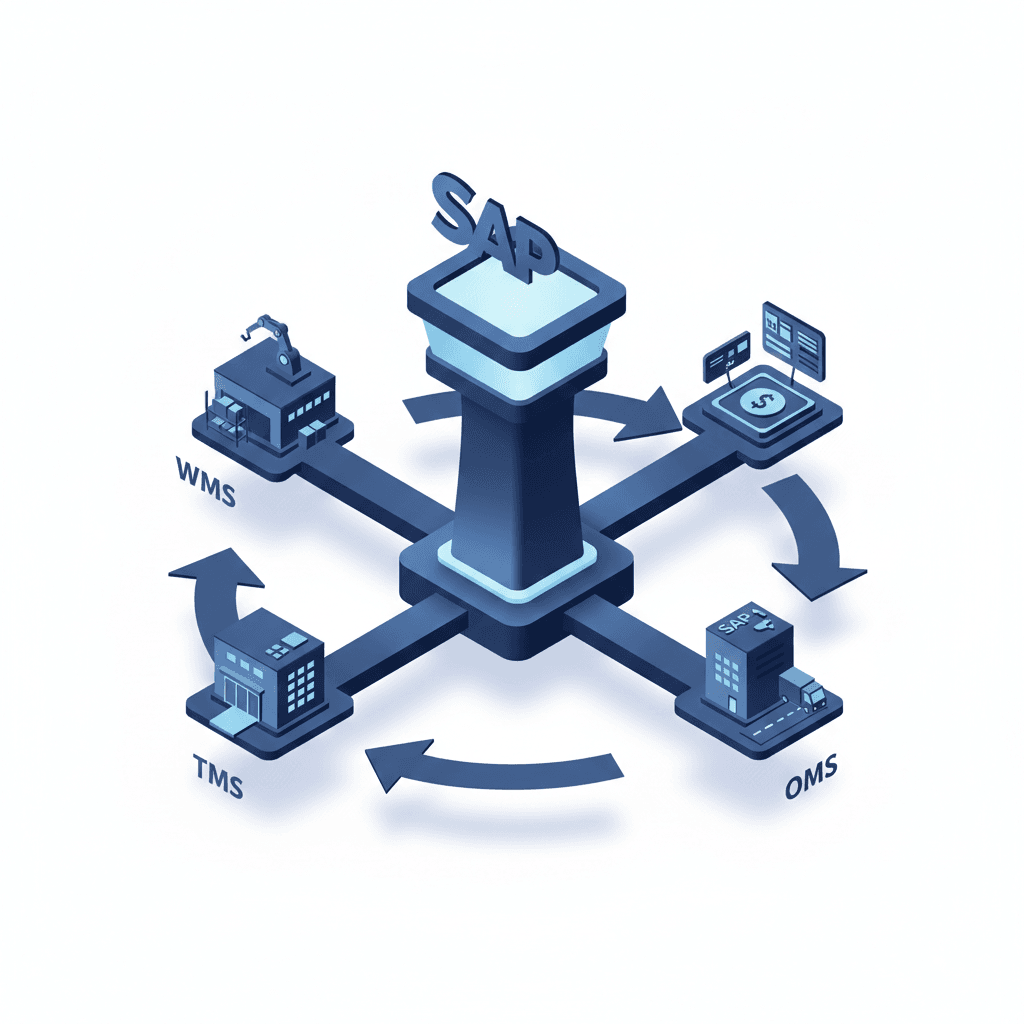
Most OMS vendors are optimized for one or two of these models. Platforms that handle all five are typically unified commerce suites or platforms that natively combine WMS, OMS, and TMS capabilities under one data architecture.
The 2026 OMS Landscape: What to Know Before Comparing Vendors
The ecommerce order management software market has matured significantly since 2020. A few structural changes are worth understanding before you evaluate vendors.
The best-of-breed vs. unified platform tension is real and growing. Many operations started by stitching together a specialist OMS with a specialist WMS and a shipping layer. The integrations worked—until they didn't. Every vendor upgrade introduces potential breakage. Every data model change requires reconciliation. In 2026, a growing share of mid-market operators are moving toward unified platforms that handle OMS, WMS, and TMS from a shared data architecture, because the integration cost of point solutions is increasingly hard to justify at scale.
AI-driven promising and routing are becoming table stakes. Leading platforms now apply machine learning to available-to-promise calculations and route selection—adjusting in real time based on carrier performance history, inventory velocity, and fulfillment cost. Platforms still using static routing rules are operationally disadvantaged in high-SKU, multi-node environments.
3PL connectivity is a make-or-break requirement. Most fast-growing ecommerce brands use at least one 3PL. If your OMS can't connect cleanly to your 3PL's WMS or portal, you lose order visibility the moment a shipment leaves your hands. In 2026, expect native connectivity to major 3PL networks as a standard OMS capability.
Key OMS Platforms Worth Evaluating in 2026
Rather than a ranked list, here are the platforms most relevant to ecommerce operations at different scales—with honest assessments of where each fits and where each falls short.
Shopify Order Management
Best for: DTC brands running primarily on Shopify with low fulfillment complexity.
Strengths: Deeply embedded in the Shopify ecosystem, excellent channel-native experience, simple to implement and maintain.
Limitations: Limited multi-node routing intelligence. Poor fit for hybrid omnichannel or 3PL-heavy operations. Not designed for high-volume B2B or complex wholesale scenarios.
Extensiv (formerly Skubana / 3PL Central)
Best for: 3PLs managing multiple client accounts; mid-market brands with multi-warehouse complexity.
Strengths: Strong 3PL billing and client portal features, solid WMS capabilities for pick-pack-ship, broad carrier integrations.
Limitations: Routing intelligence is rules-based rather than dynamic. TMS capability requires separate tooling. UI complexity can be significant for non-technical operations teams.
Logiwa
Best for: 3PLs and fulfillment centers running high-volume B2C operations.
Strengths: Purpose-built for fulfillment execution, good WMS depth, cloud-native architecture, strong carrier integration library.
Limitations: OMS capability is secondary to WMS. Multi-channel order normalization often requires workarounds. Not a unified OMS+WMS+TMS platform—transportation orchestration requires additional tooling.
ShipBob
Best for: SMB and growth-stage DTC brands outsourcing fulfillment to ShipBob's owned network.
Strengths: Pre-built carrier network, fast time-to-value, strong Shopify integration, owned fulfillment centers reduce coordination overhead.
Limitations: Locked into ShipBob's network. Poor fit for brands with their own warehouse or a mixed 3PL model. OMS capability is limited when used outside ShipBob's infrastructure.
Deposco
Best for: Mid-market retailers and brands with omnichannel fulfillment complexity.
Strengths: Solid OMS + WMS integration, good retail fulfillment capability including ship-from-store and BOPIS, flexible routing rule configuration.
Limitations: Implementation complexity and time-to-value can be high. TMS is not native. Pricing lands at enterprise tiers, which can be difficult for growth-stage companies to justify.
Omniful
Best for: Growth-stage and mid-market ecommerce brands, 3PLs, and omnichannel retailers that need unified WMS + OMS + TMS without the integration overhead of point solutions.
Strengths: Unified architecture means inventory, order routing, warehouse execution, and carrier selection share a single data model. There is no integration tax between OMS and WMS—they are the same system. Configurable routing rules support multi-node, multi-carrier, and omnichannel scenarios out of the box. Purpose-built for demanding ecommerce and retail environments, with strong support for dark store and quick-commerce operations. Native TMS layer for last-mile delivery orchestration.
Why it's different: Most OMS platforms require separate WMS and TMS tools, creating the integration complexity described throughout this guide. Omniful eliminates this architectural problem by running all three from one platform. Order routing logic talks directly to warehouse execution, which talks directly to carrier selection—all without inter-system API calls and all with a single source of truth for inventory.
Common OMS Buying Mistakes to Avoid
Buying for today's volume, not tomorrow's complexity. Most OMS platforms are easy to buy and painful to migrate away from. Evaluate not just whether the platform handles your current operation, but whether it can grow into next-stage complexity—more SKUs, more channels, more fulfillment nodes, international expansion.
Underweighting WMS integration quality. A clean OMS-to-WMS integration is the most critical workflow in your fulfillment operation. Evaluate this specifically, not as a checkbox. Ask vendors to demonstrate real-time inventory sync and order status callbacks under load conditions.
Ignoring returns. Returns management is unglamorous but operationally expensive. Ask specifically how each platform handles RMA workflows, reverse logistics routing, and inventory reconciliation on returned items. A weak returns workflow creates ongoing inventory accuracy problems that compound over time.
Confusing shipping software with order management. ShipStation, EasyPost, and similar tools are excellent for shipping rates and label generation. They are not order management systems. Make sure you're evaluating the right category for your operational need.
Over-weighting the vendor's feature list. The feature list tells you what the platform can do under ideal conditions. What matters is how the platform performs under your specific constraints—peak volume, multi-node complexity, exception management, and returns velocity.
The Case for Unified OMS + WMS + TMS Architecture
The most strategic question in this evaluation isn't which OMS to buy. It's whether to buy a standalone OMS or a platform that unifies order management with warehouse execution (WMS) and delivery orchestration (TMS).
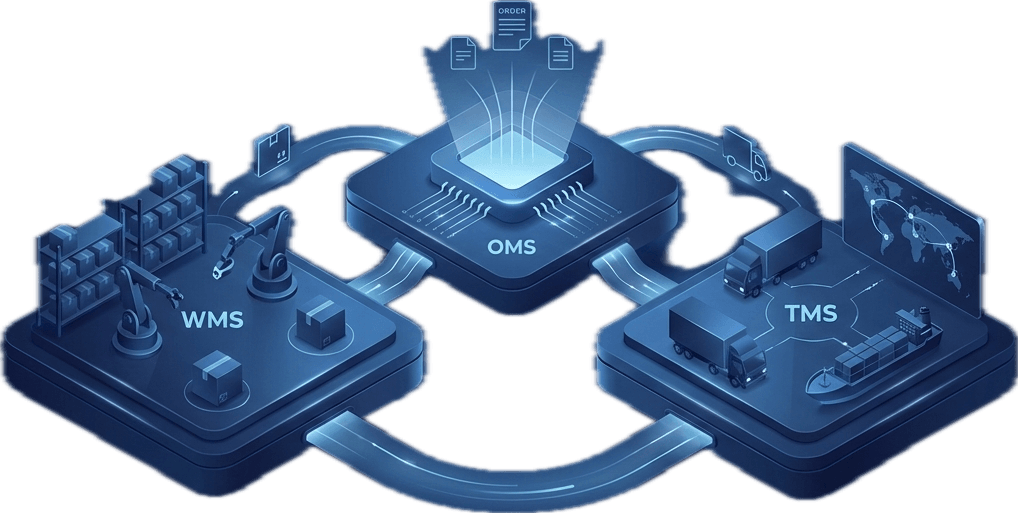
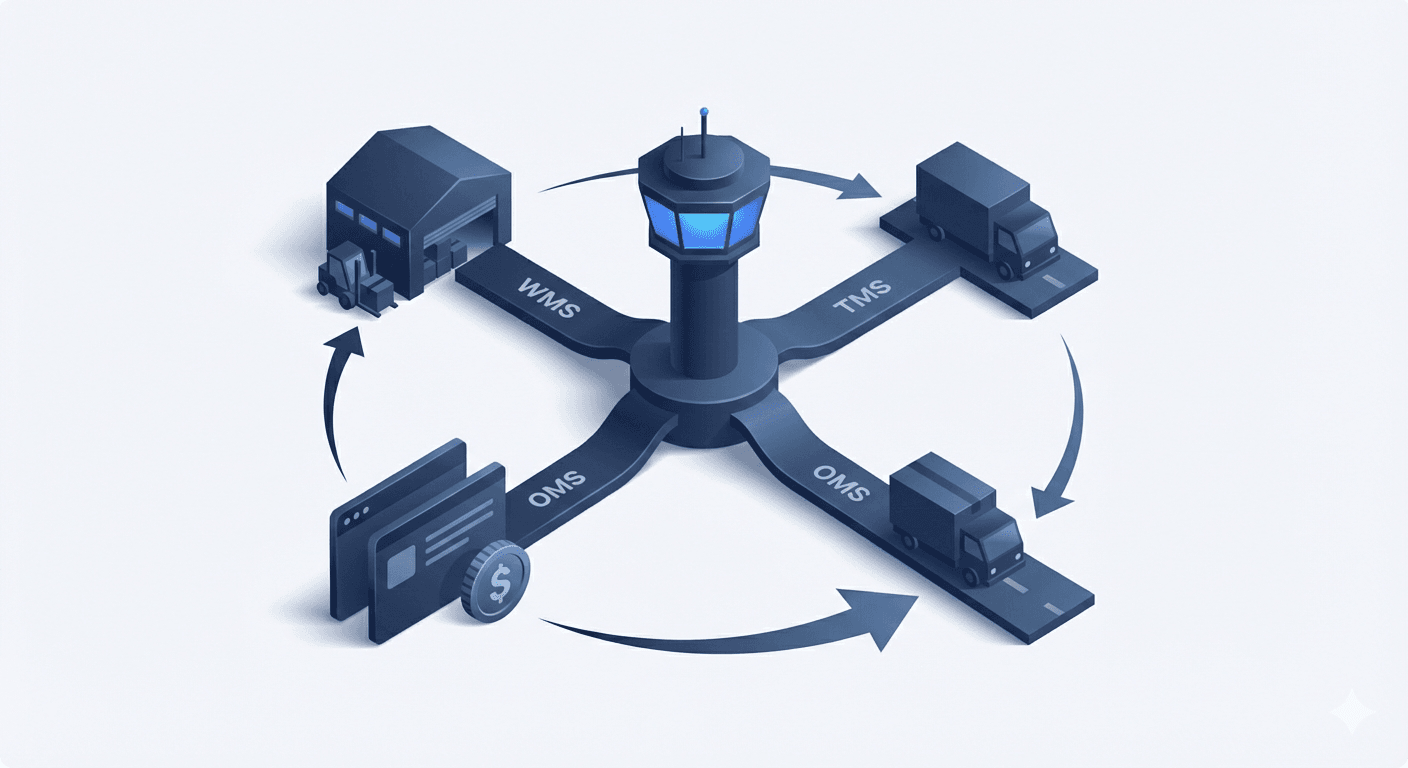
When an order arrives, three things need to happen in sequence: determine where to fulfill it from (OMS), execute pick-pack-ship at that location (WMS), and select the right carrier and generate the shipment (TMS). In a point-solution stack, each step happens in a different system connected by API integrations. The integration works—until it doesn't. When it fails, debugging across three different vendor support queues is painful, slow, and expensive.
In a unified platform, all three steps happen in one system with one data model. Inventory is the same object across OMS and WMS. Carrier selection logic sits inside the same platform as order routing. Status updates propagate instantly because there's no inter-system handoff to introduce delay or failure.
The operational benefits are concrete: faster exception resolution, less integration maintenance, better order visibility from checkout to doorstep, and fewer errors at system boundaries. For operations that have outgrown the point-solution approach—or want to avoid it from the start—a unified WMS + OMS + TMS platform is increasingly the architecturally correct choice.
Choosing the Right OMS: A Decision Framework
| If you are... | Consider... | ||| | A DTC brand on Shopify, under 500 orders/day, single warehouse | Shopify native OMS or lightweight add-on | | A 3PL managing multiple client accounts | Extensiv or Logiwa | | A brand outsourcing entirely to ShipBob's network | ShipBob | | A mid-market brand with multi-node fulfillment and 3PL mix | Deposco or Omniful | | An omnichannel retailer needing BOPIS + ship-from-store + DTC | Omniful or Manhattan Active OMS | | A brand that wants to eliminate WMS+OMS integration complexity | Omniful (unified WMS + OMS + TMS) |
FAQ: Best Order Management Software for Ecommerce
What's the difference between an OMS and an ERP? An ERP manages financial and operational data across the full business. An OMS specializes in the order lifecycle—from capture through fulfillment and returns. ERPs often include basic order management, but they lack the routing intelligence, multi-channel normalization, and WMS integration depth of a purpose-built OMS.
Do I need an OMS if I'm already using Shopify? Shopify handles order management well for single-channel, single-warehouse DTC brands. Once you add Amazon, wholesale, multiple warehouses, 3PLs, or physical retail, Shopify's native OMS capability hits limits quickly. Most scaling ecommerce operations eventually outgrow it.
How long does OMS implementation typically take? Lightweight cloud OMS platforms for SMBs typically take 2–6 weeks. Mid-market platforms with multi-node complexity run 2–4 months. Enterprise platforms like Manhattan or Oracle range from 6–18 months. Unified WMS+OMS platforms typically fall in the 4–12 week range depending on integration scope.
What's the most common OMS integration failure point? WMS integration—specifically real-time inventory sync and order status callbacks. When these run on a delay or fail silently, orders route to locations that can't fulfill them, and customers receive incorrect delivery promises that create downstream service costs.
Can one platform replace my OMS, WMS, and TMS? Increasingly, yes. Unified platforms like Omniful are purpose-built to run all three from a shared data model. For operations with high fulfillment complexity and multi-node environments, this architecture eliminates the integration overhead that multi-vendor point solutions create.
What should I ask vendors during an OMS demo? Ask to see: real-time inventory sync with a WMS under load, how routing rules handle a split-shipment scenario, how exceptions are surfaced and resolved, what happens when a fulfillment node goes offline, and how returns inventory is reconciled. These scenarios reveal integration depth and operational maturity more than any feature list.
What the Best OMS Really Buys You
The best order management software for ecommerce isn't the one with the longest feature list. It's the one that removes friction from your most critical workflow—the path from order received to order delivered.
In 2026, that means accurate inventory promises at checkout, intelligent routing to the right fulfillment node, clean communication with your warehouse execution layer, multi-carrier optimization, and exception management that catches problems before they become customer complaints.
The platforms that do all of this well—especially when they unify OMS with WMS and TMS—give ecommerce operations a structural advantage over those managing the same workflows across three separate vendor relationships with three separate integration surfaces and three separate support queues.
If your current stack is showing signs of integration strain—delayed inventory sync, routing errors, fulfillment exceptions, or returns chaos—that's not a sign you need to optimize individual tools. It's a sign you need better architecture.
See How Omniful Handles Order Management Differently
Omniful is built for ecommerce brands, 3PLs, and omnichannel retailers that need more than a standalone OMS. With native WMS, OMS, and TMS capabilities running from a unified data layer, Omniful eliminates the integration complexity that limits most fulfillment stacks—so your routing logic, warehouse execution, and carrier selection all work from the same real-time data.
If you're evaluating order management software and want to see how unified architecture performs under real operational complexity, book a demo with the Omniful team.
Share On